Labs · Wearables · Context

Your health numbers,
in context.

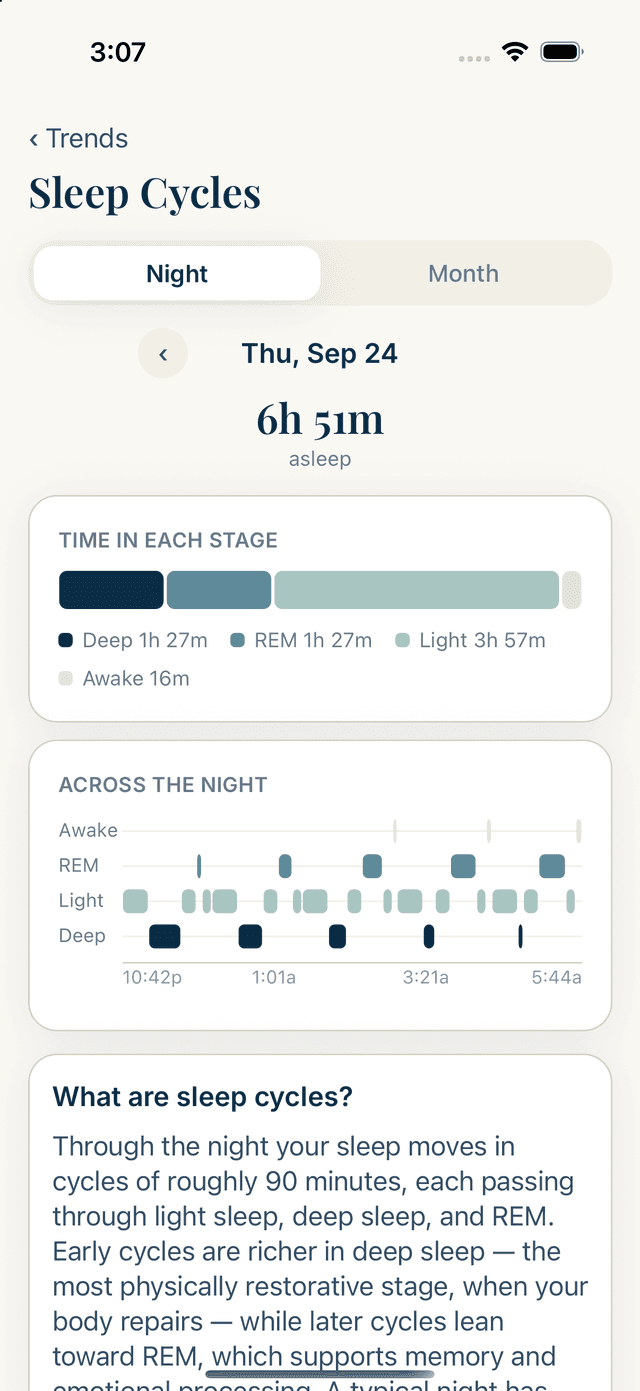
You already have the data. Your labs are in a PDF you can’t read, and your wearable has been collecting since the day you put it on. Bearing puts all of it on one map of your body — what’s in range, what’s worth a look, and what’s still missing — in plain English, updated every day.

Bearing's Sleep Cycles screen: time in each stage and a chart of the night's deep, light and REM sleep
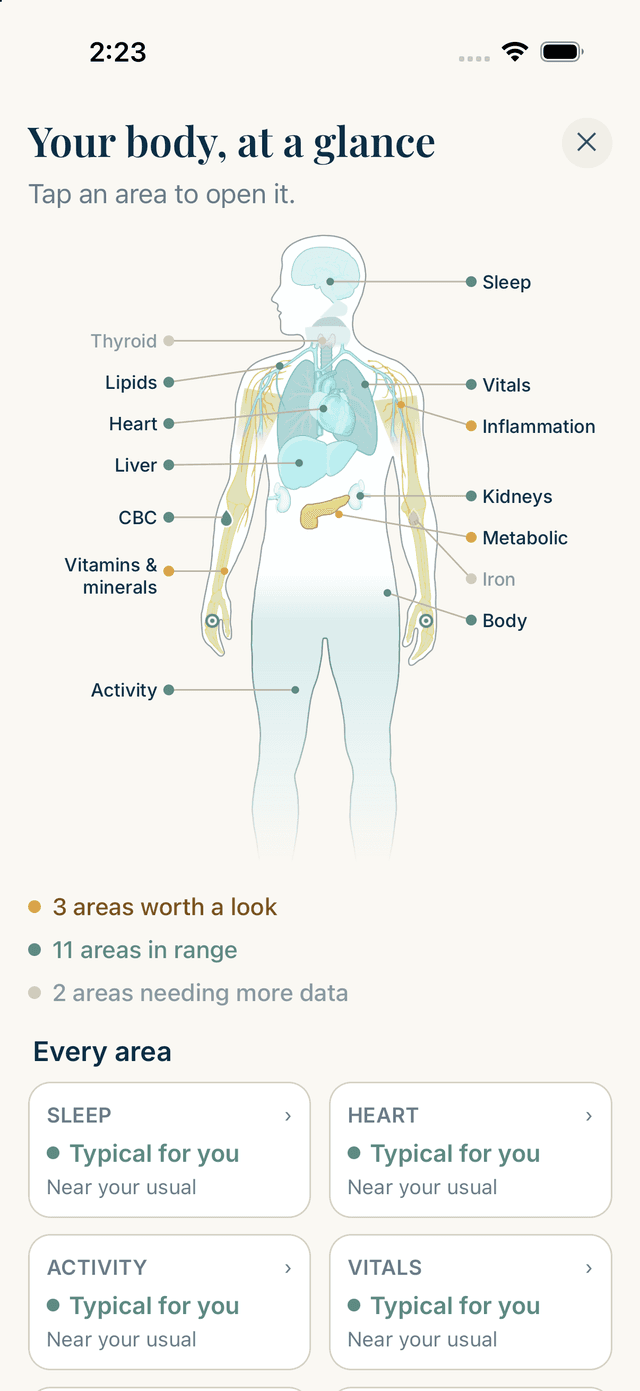
Bearing's body map: each area of the body colored by whether its results are in range, worth a look, or still need data
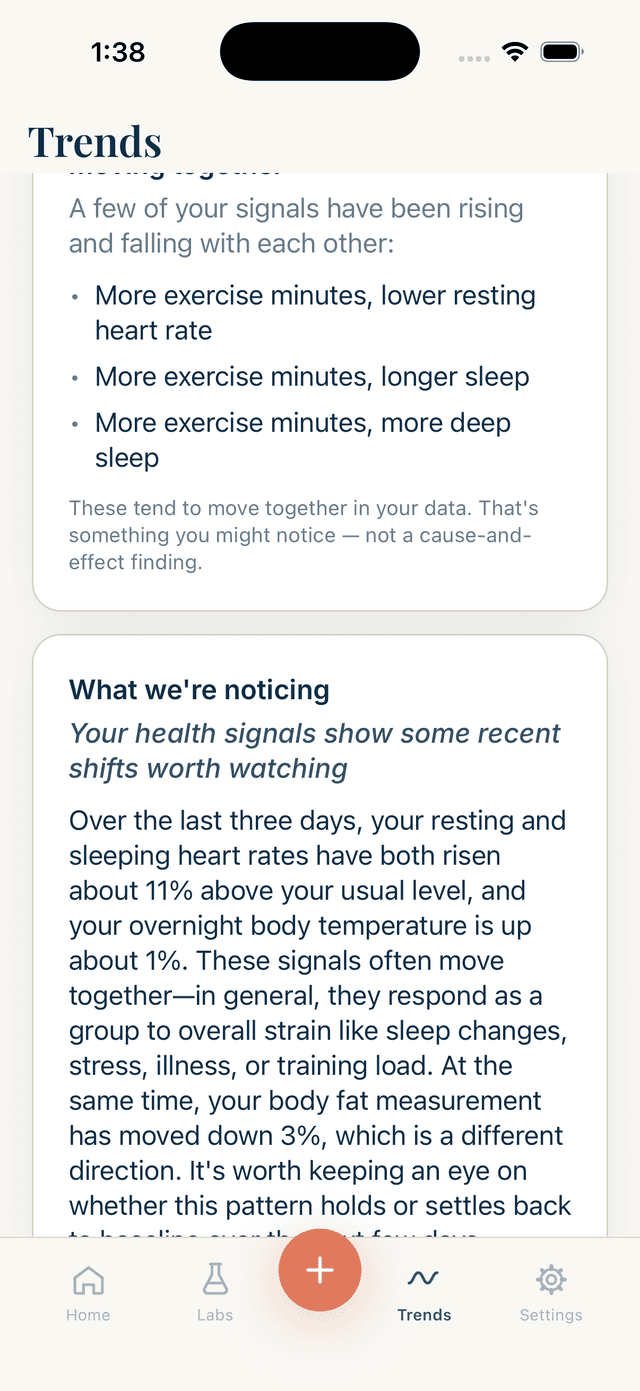
An AI-written explanation of what this person's recent signals are doing

Why this exists

Collecting the data was never the hard part.

Your phone has quietly recorded years of your health. Your results are sitting in a portal. None of it has ever been explained to you.

01

Health apps hand you a wall of charts and leave you to interpret them. More screens, buried menus, and no answer to the only question you actually have: is this okay?

02

Results arrive as a page of abbreviations. You scan for anything flagged, feel vaguely worried or vaguely relieved, and file it away.

03

Nothing connects the two. Your bloodwork and your sleep live in different apps, so nobody ever tells you they’re related — least of all when it matters.

At a glance

Your whole body, on one screen.

Every lab result and every wearable reading lands on one map of your body — lipids in the blood vessels, blood sugar at the pancreas, sleep at the brain, activity in the legs. Each area is colored by what your own numbers say, and one tap opens the results behind it.

In plain English

Every number, explained like a person would.

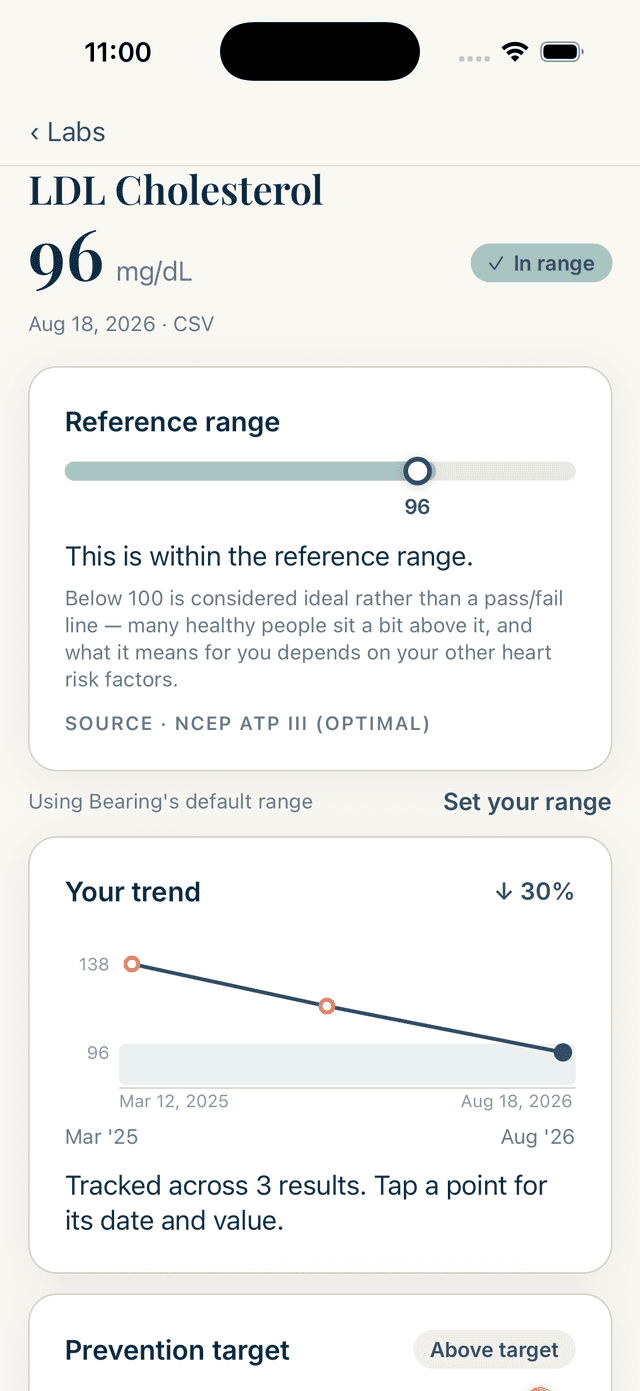
Bearing takes each result and tells you what it is, what it means for you, and what moves it — in the language you’d want from a friend who happens to know medicine. Every range it quotes names its source, so you can see who says so.

Written for your data

Observations about you, not about people in general.

Bearing reads your own history and writes up what it sees — the kind of thing you’d never catch flipping between apps.

“Over the last three days, your resting and sleeping heart rates have both risen about 11% above your usual level, and your body temperature is up about 1%. These signals often move together.”

Written by Bearing, from one person’s data

Connections

What moves with what.

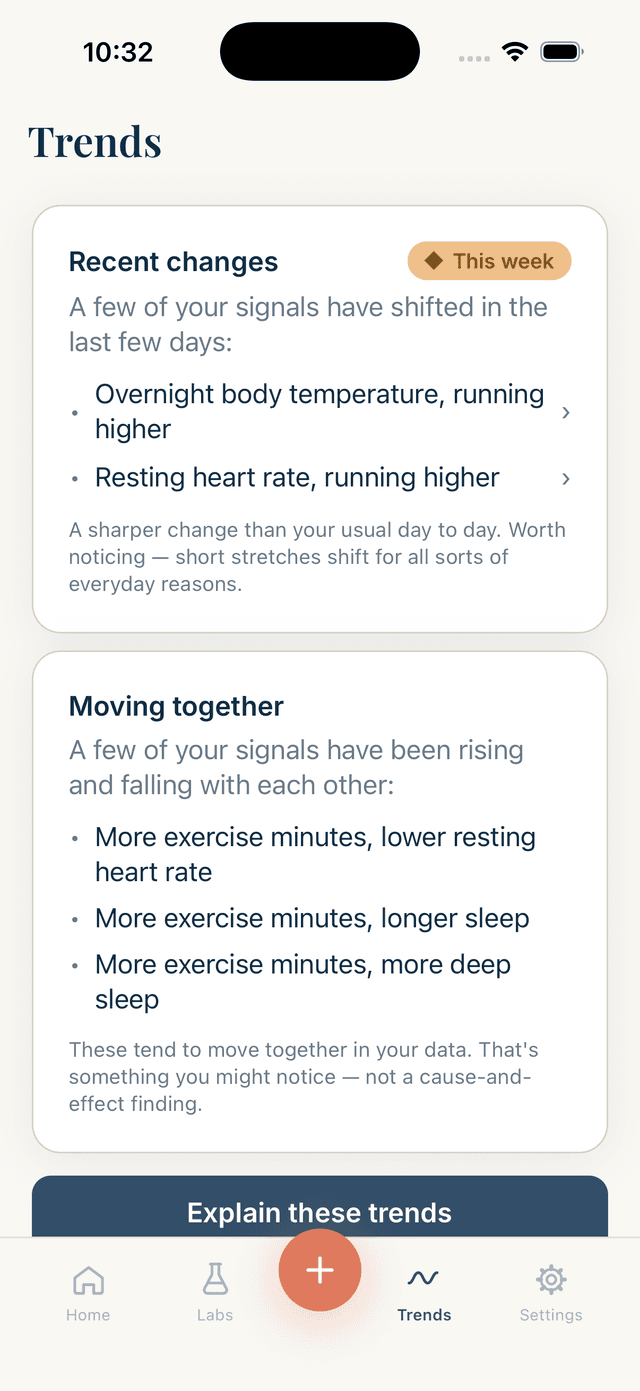
Bearing watches how your signals travel together and tells you plainly — carefully framed as something you might notice, never as cause and effect.

  • More exercise minutes, lower resting heart rate
  • More exercise minutes, more deep sleep
  • Body temperature, running higher

Every single day

Your normal, not a textbook's.

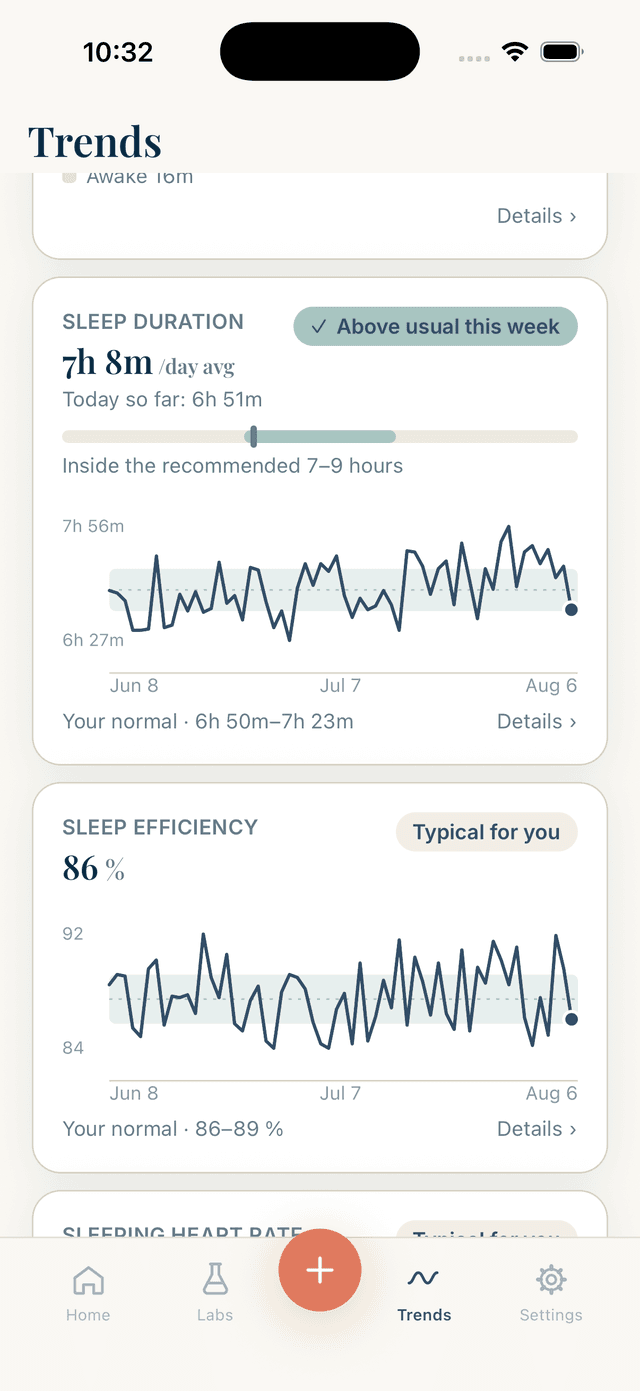
Bearing learns what’s typical for you and measures each day against that. “Above your usual” is a far more useful sentence than a number you’d have to go and look up.

Sleep duration, stages & efficiencyVO₂ maxResting heart rateHRVActivityBMI & body fatBlood pressureSpO₂and more

Weekly & monthly

Which direction are you actually going?

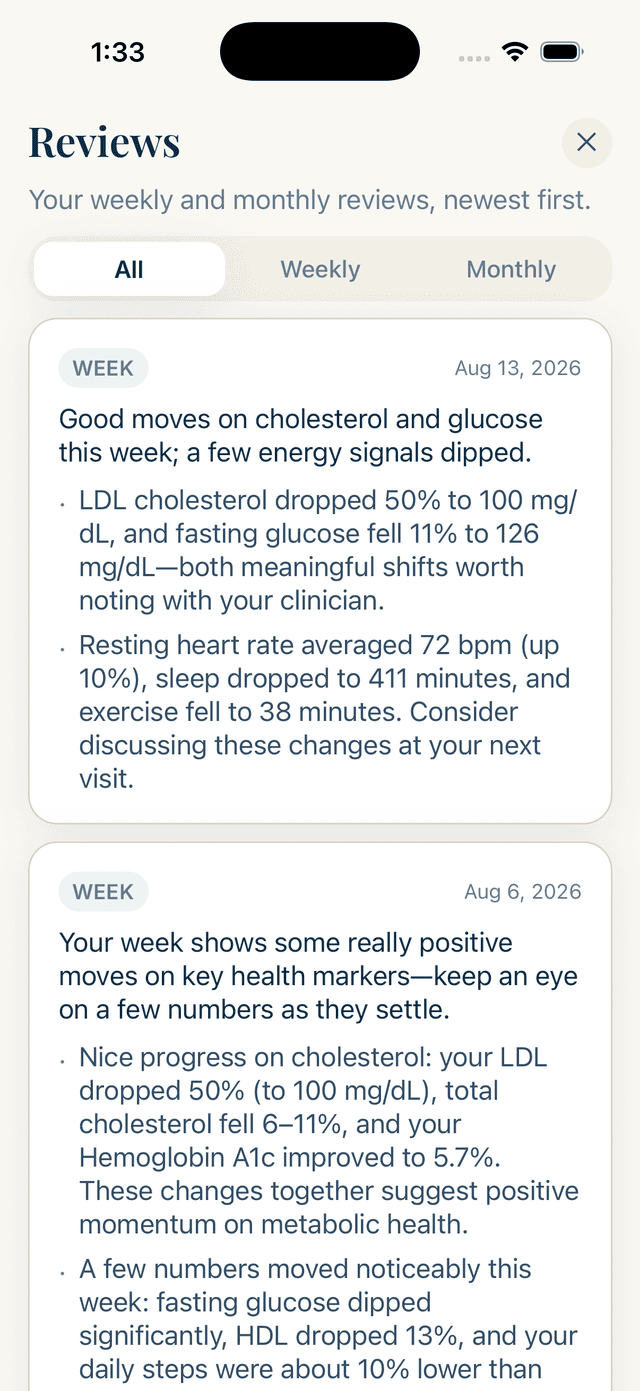
Day-to-day noise hides the trend. Every week and every month Bearing writes you a short review of what genuinely moved, what’s worth watching, and what went right — so you can see the shape of your health over time instead of guessing at it.

The fuller picture

And what you haven't measured yet.

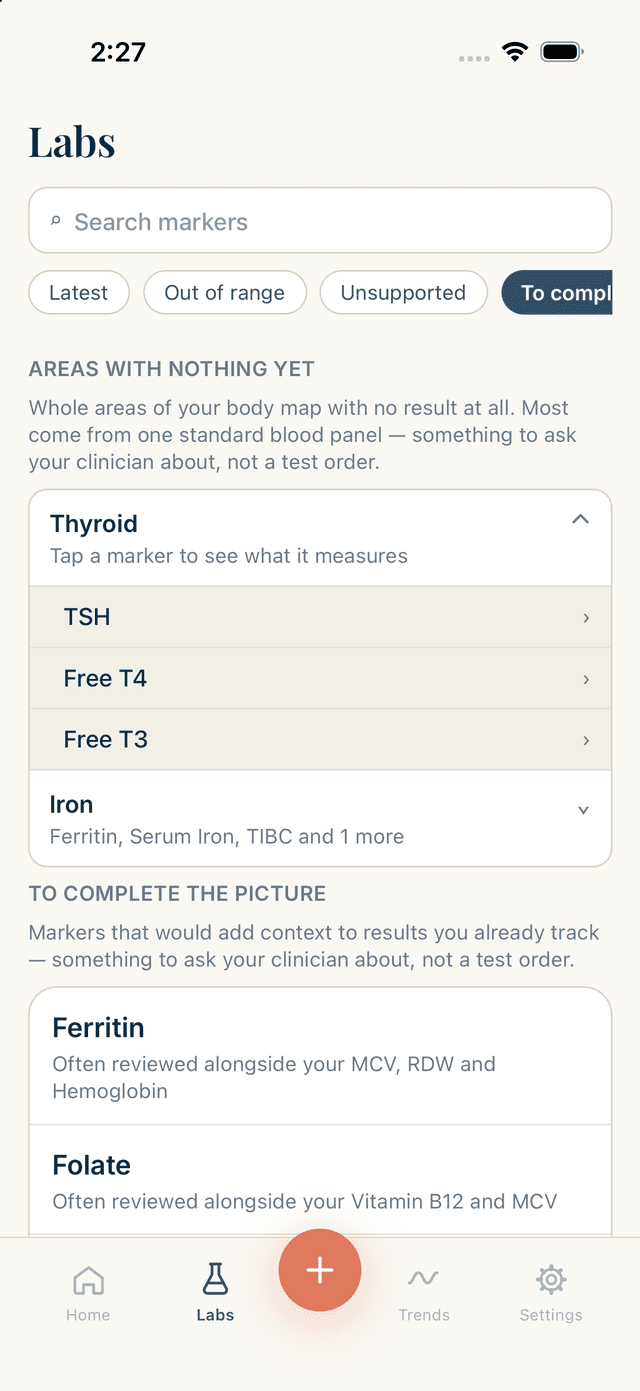
The grey areas on your map are the ones you have no results for. Bearing names the markers that would fill each one, and every marker opens a plain-English page on what it measures — so you can see why it’s worth asking about before your next blood draw.

“TSH, Free T4 and Free T3 would fill this in — worth asking your clinician about.”

Something to ask about, not a test order
The body map, with each area colored by what this person's results say
An LDL result explained in plain language, with its source cited
Bearing's written explanation of this person's recent shifts
Recent changes and signals moving together
Sleep duration charted against a personal normal band
Weekly reviews summarizing what moved
Areas of the body with no results yet, and the markers that would fill each one

For your appointment

Walk in with a summary, not a shoebox.

Bearing turns everything it knows about you into one document your doctor can read in thirty seconds — your results, what’s changed, and the specific questions worth asking.

Fifteen-minute appointments go better when you arrive with the picture already organized.

Bearing · Doctor summary

Prepared for your appointment

Covering Mar 2025 – Aug 2026
LDL Cholesterol96 mg/dL ↓ 30%
Triglycerides94 mg/dL ↓ 44%
Hemoglobin A1c5.8 % ↑
Vitamin D18 ng/mL ↓

Is the A1c drift worth acting on now, or watching?

Should vitamin D be repeated before supplementing?

Does the lipid improvement change my risk picture?

Illustration — the real screenshot needs a Premium account to capture.

Pricing

Start free. Upgrade when it’s earning its keep.

Everything above is Bearing Premium. There’s a free tier too, and it’s genuinely useful on its own.

Free
$0 forever
Core tracking, no card required.
  • Apple Health sync and all your trends
  • Personal baselines — your own normal
  • One lab report import
  • Three AI explanations
  • Export your data any time
Premium
$79.99 / year
Works out to $6.67 a month · 7-day free trial
  • Unlimited lab imports
  • Plain-English explanations for every marker
  • Observations written from your own trends
  • Weekly and monthly reviews
  • Doctor-ready summaries and questions to ask
  • Benchmarks and prevention targets

Get Bearing

Your numbers, starting today.

Free to start — sync your health data and import a lab report without paying anything.

Good to know

Questions worth answering.

Does Bearing replace my doctor?

No, and it doesn't try to. Bearing is educational — it explains what your numbers mean and helps you ask better questions. It doesn't diagnose, prescribe, or tell you what to do about anything. The doctor summary exists precisely because the conversation with a clinician is the point.

Where does my data go?

Your health data is yours. It's stored against your account so the app can show you trends over time, you can export all of it whenever you like, and you can delete it — all of it, or your whole account — from inside the app or from this site.

Do I need a wearable?

No. Labs alone work fine, and a wearable alone works fine. They're better together, because that's where Bearing can tell you things neither source knows on its own.

Where do the explanations come from?

Bearing writes them from your own numbers, against reference ranges drawn from published clinical guidance — and it names the source each time, so you can see who says so rather than taking our word for it.